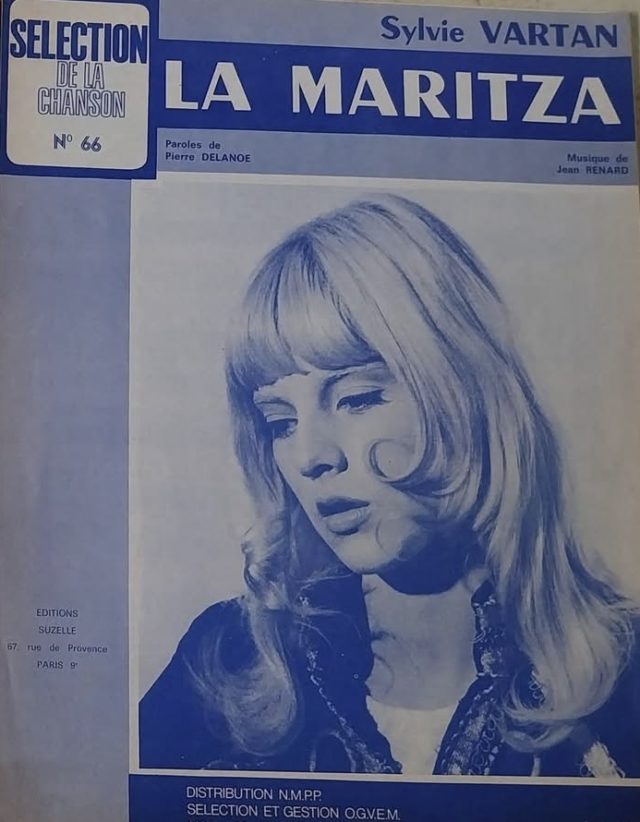
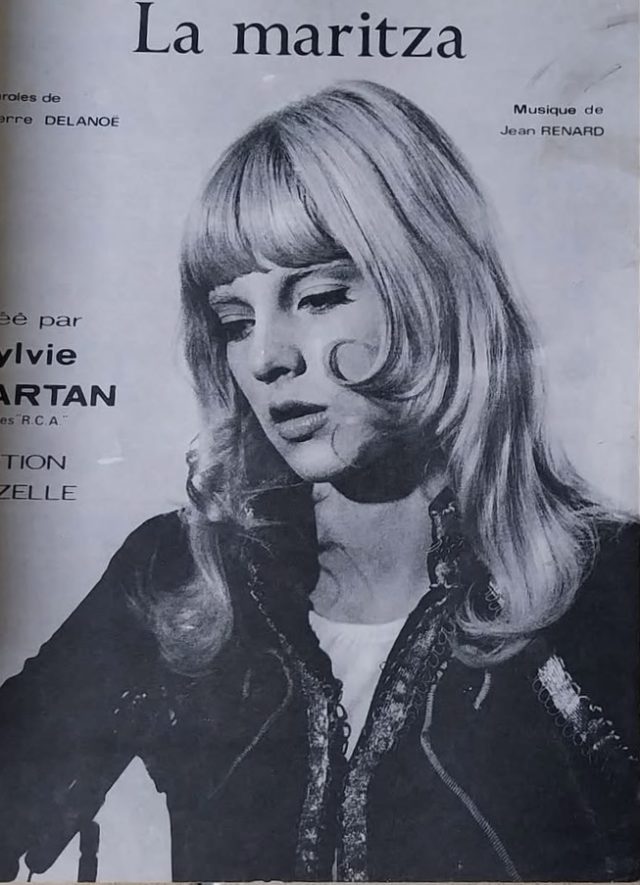
Genèse | Genesis
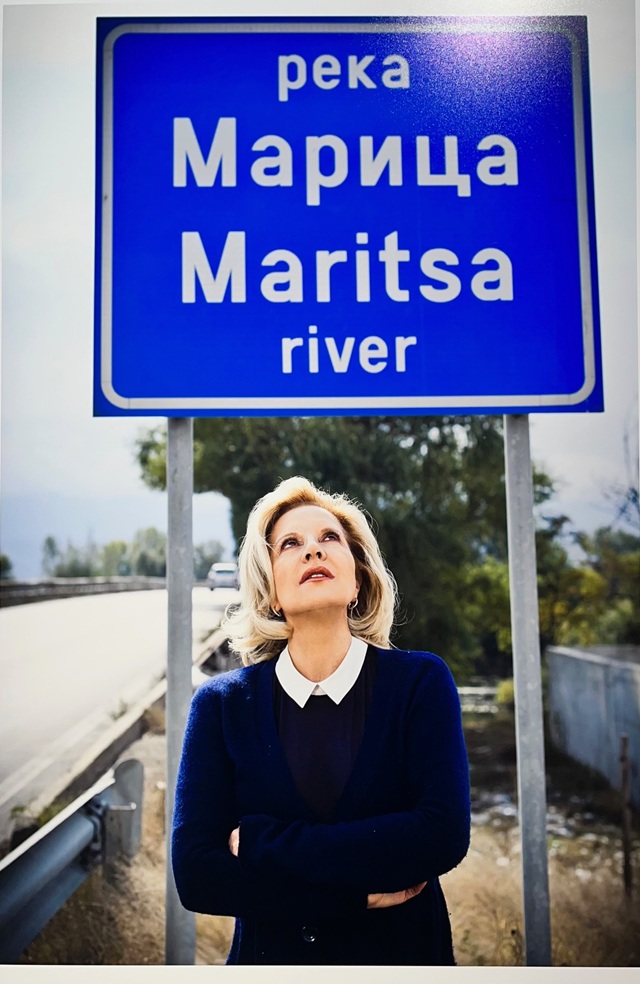
Initialement composée par Jean Renard et écrite par Pierre Delanoë, cette chanson évoque bien entendu la Maritsa, fleuve de Bulgarie, le pays où Sylvie Vartan a vécu jusqu’à l’exil familial, en décembre 1952.
Originally composed by Jean Renard and written by Pierre Delanoë, this song naturally evokes the Maritsa, a river in Bulgaria, the country where Sylvie Vartan lived until her family went into exile in December 1952.
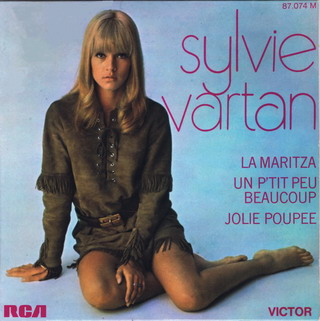
En France, la chanson est publiée sur un EP de trois titres et ouvre l’album qui paraît en décembre 68. Elle sera interprétée à l’Olympia au même moment et dans le show TV Jolie Poupée.
In France, the song was released on a three-track EP and opened the album that came out in December 1968. It was performed at the Olympia theatre at the same time and on the television show Jolie Poupée.
Versions étrangères | Foreign versions
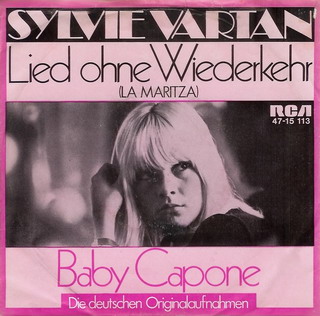
Elle existe en trois autres langues : en italien (sous le même titre), en allemand (Lied ohne Wiederkehr) et en japonais (sous le titre Omoide no Marritsa)
It exists in three other languages: Italian (under the same title), German (Lied ohne Wiederkehr) and Japanese (under the title Omoide no Marritsa).
Vidéo en 4 langues | Video in 4 languages
Video: Olivier Gélin
Succès commercial | Popularity
En France, elle s’écoule à environ 260 000 exemplaires. A l’étranger, la Maritza se classe dans le top 10 des charts belge, finlandais, turc et brésilien | In France, it sells around 260,000 copies. Abroad, Maritza ranks in the top 10 of the Belgian, Finnish, Turkish and Brazilian charts.
Anecdote juridique | A legal story

Dans son Dictionnaire des chansons (pages 304 à 307), Benoît Cachin reproduit des interviews de Jean Renard et Pierre Delanoë qui expliquent la genèse de cette chanson et racontent l’incroyable procès intenté par les ayants droit Kosma, condamnant Jean Renard et Pierre Delanoë pour plagiat des Feuilles mortes. On peut regretter qu’aucun appel de ce jugement (TGI de Paris du 10 février 1971) n’ait été interjeté par les auteurs / compositeurs et la maison de disques RCA, tant la ressemblance de la Maritza avec les feuilles mortes est discutable (l’accusation de plagiat portait particulièrement sur la ligne mélodique du refrain). Désormais, pour l’utiliser, il faut obtenir deux autorisations : celle de Sylvie pour l’utilisation de la bande qui contient sa voix et celle d’Eugénie Bachelot-Prévert qui perçoit les droits d’auteur.
In his Dictionnaire des chansons (pages 304 to 307), Benoît Cachin reproduces interviews with Jean Renard and Pierre Delanoë explaining the song’s origins and recounting the incredible lawsuit brought by Kosma’s beneficiaries, condemning Jean Renard and Pierre Delanoë for plagiarising Feuilles mortes. It is regrettable that no appeal was lodged against this judgement (Paris Regional Court, 10 February 1971) by the authors/composers and the RCA record label, as the resemblance between La Maritza and Les Feuilles Mortes is debatable (the accusation of plagiarism focused particularly on the melody line of the chorus). From now on, in order to use it, two authorisations must be obtained: one from Sylvie for the use of the tape containing her voice, and one from Eugénie Bachelot-Prévert who collects the royalties for ‘La Maritza’. .
Portée symbolique | A symbol
Cette chanson fait partie d’une vingtaine de titres en écoute au Musée national de l’immigration, porte Dorée à Paris. Elle a servi de sonorisation à la pièce Les tribulations d’une étrangère d’origine d’Elizabeth Mazev. La chanson a pris des accents de protest song lorsque Sylvie l’a interprétée en Bulgarie, lors de son concert à Sofia en 1990.
This song is one of around twenty tracks available to listen to at the Musée national de l’immigration, porte Dorée in Paris. It was used as background music for Elizabeth Mazev’s play Les tribulations d’une étrangère d’origine. The song took on the tone of a protest song when Sylvie performed it in Bulgaria during her concert in Sofia in 1990.
Les autres versions | Other versions
La Maritza a été réenregistrée en version acoustique en 1994. Sylvie en a livré une version symphonique inspirée du boléro de Ravel lors de son concert célébrant ses 50 ans de carrière scénique à la salle Pleyel en 2011. C’est cette version qui figure sur l’EP enregistré en soutien à l’Ukraine en 2022, avec un texte introductif. La dernière version studio remonte à l’album Une vie en musique en 2015. | La Maritza was re-recorded in an acoustic version in 1994. Sylvie performed a symphonic version inspired by Ravel’s Boléro during her concert celebrating 50 years on stage at the Salle Pleyel in 2011. It is this version that appears on the EP recorded in support of Ukraine in 2022, with an introductory text. The latest studio version dates back to the album Une vie en musique in 2015.
Reprises | Covers
En France, La Maritza a été reprise, entre autres, par Laura Ferré, Elisa Tovati et Nawel Ben Kraiem. A la télévision, cette chanson a été interprétée par Chimène Badi et à la radio par Benabar (2014). La Maritza est fredonnée par la comédienne Florence Viala dans l’adaptation du roman de Marcel Proust « Le côté de Guermantes » mise en scène par Christophe Honoré à la comédie française en 2020. La cantatrice Axelle Saint-Cirel l’a interprétée pour rendre hommage à Sylvie, lors des Victoires de la musique en 2025. Jenifer et Nolwen Leroy l’ont interprétée ensemble lors de l’édition 2026 des Enfoirés. A l’étranger, La Maritza a été reprise par Thanh Lan, le groupe de métal suédois Thérion, la Tchèque Patricia Janeckova, Bart Kaëll (en néerlandais) et en finnois par Seija Simola et Opra Monica. Edward Aris en a enregistré un instrumental ainsi que Kerem Celik & Erman Türkeli.
In France, La Maritza has been covered by Laura Ferré, Elisa Tovati and Nawel Ben Kraiem, among others. On television, the song was performed by Chimène Badi and on the radio by Benabar (2014). La Maritza is hummed by actress Florence Viala in the adaptation of Marcel Proust’s novel Le côté de Guermantes, directed by Christophe Honoré at the Comédie Française in 2020. Opera singer Axelle Saint-Cirel performed it in tribute to Sylvie at the Victoires de la Musique awards in 2025. It was performed by Jenifer and Nolwen Leroy in 2026. Abroad, La Maritza has been covered by Thanh Lan, the Swedish metal band Thérion, the Czech Patricia Janeckova, Bart Kaëll (in Dutch) and in Finnish by Seija Simola and Opra Monica. Edward Aris recorded an instrumental version, as did Kerem Celik & Erman Türkeli.
Une chanson devenue virale | A song that went viral

Le succès de ce titre est relancé par le Film Ma mère, Dieu et Sylvie Vartan en 2025.

While rehearsing for her final concert in July 2024, Sylvie saw ‘La Maritza’ become one of the most popular songs on social media. The song’s success was revived by the 2025 film Ma mère, Dieu et Sylvie Vartan.
Dans une vidéo publiée sur les réseaux sociaux, Sylvie a tenu à remercier les internautes : « Je voudrais vous remercier personnellement pour toutes les vidéos et tout le contenu créé sur TikTok autour de ma chanson « La Maritza ». C’est vrai, certains d’entre vous la connaissaient déjà, mais pour ce qui est des plus jeunes, je crois que ça a été une vraie découverte ! C’est une chanson qui me tient à cœur et qui a beaucoup de sens pour moi. J’aime beaucoup regarder tous vous contenus. J’ai hâte de la chanter avec vous (…) en attendant, passez d’excellentes vacances et bon été à tous ! ». | In a video posted on social media, Sylvie thanked internet users: « I would like to personally thank you for all the videos and content created on TikTok around my song “La Maritza”. It’s true, some of you already knew it, but for the younger ones, I think it was a real discovery! It’s a song that is close to my heart and means a lot to me. I really enjoy watching all your content. I can’t wait to sing it with you (…) In the meantime, have a great holiday and a wonderful summer, everyone! »
La chanson figure également dans le documentaire consacré à la première dame des Etats-Unis, au milieu de standards anglo-saxons (qui vont de Gimme Shelter des Rolling Stones à Billie Jean de Michael Jackson en passant par Amazing Grace d’Aretha Franklin). « C’est incroyable qu’elle adore ma chanson ! », se serait exclamée Sylvie en apprenant la nouvelle depuis sa maison de Beverly Hills. | The song also features in the documentary about the First Lady of the United States, alongside Anglo-Saxon classics (ranging from Gimme Shelter by the Rolling Stones to Billie Jean by Michael Jackson and Amazing Grace by Aretha Franklin). ‘It’s incredible that she loves my song!’ Sylvie reportedly exclaimed when she heard the news at her home in Beverly Hills.
Remixes
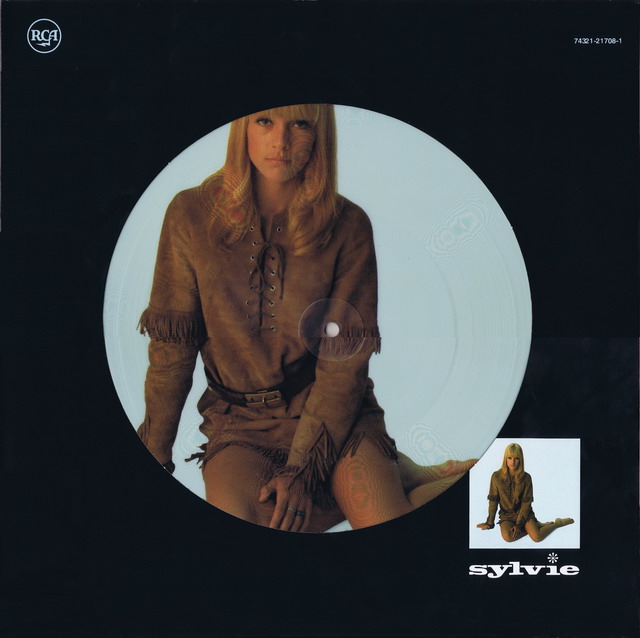
Notons enfin que ce titre a fait l’objet de remixes et d’un single en picture-disc… | Finally, it should be noted that this track has been remixed and released as a picture disc single…
Version longue (3’24)
Version courte (2’47)
Vidéo
Le témoignage ému de Sylvie | Sylvie shares her emotions
Est-ce que tu le sais ?
Sylvie a créé un parfum du nom de cette chanson à la fin des années 60.